By Plont · Originally published 28 October 2026
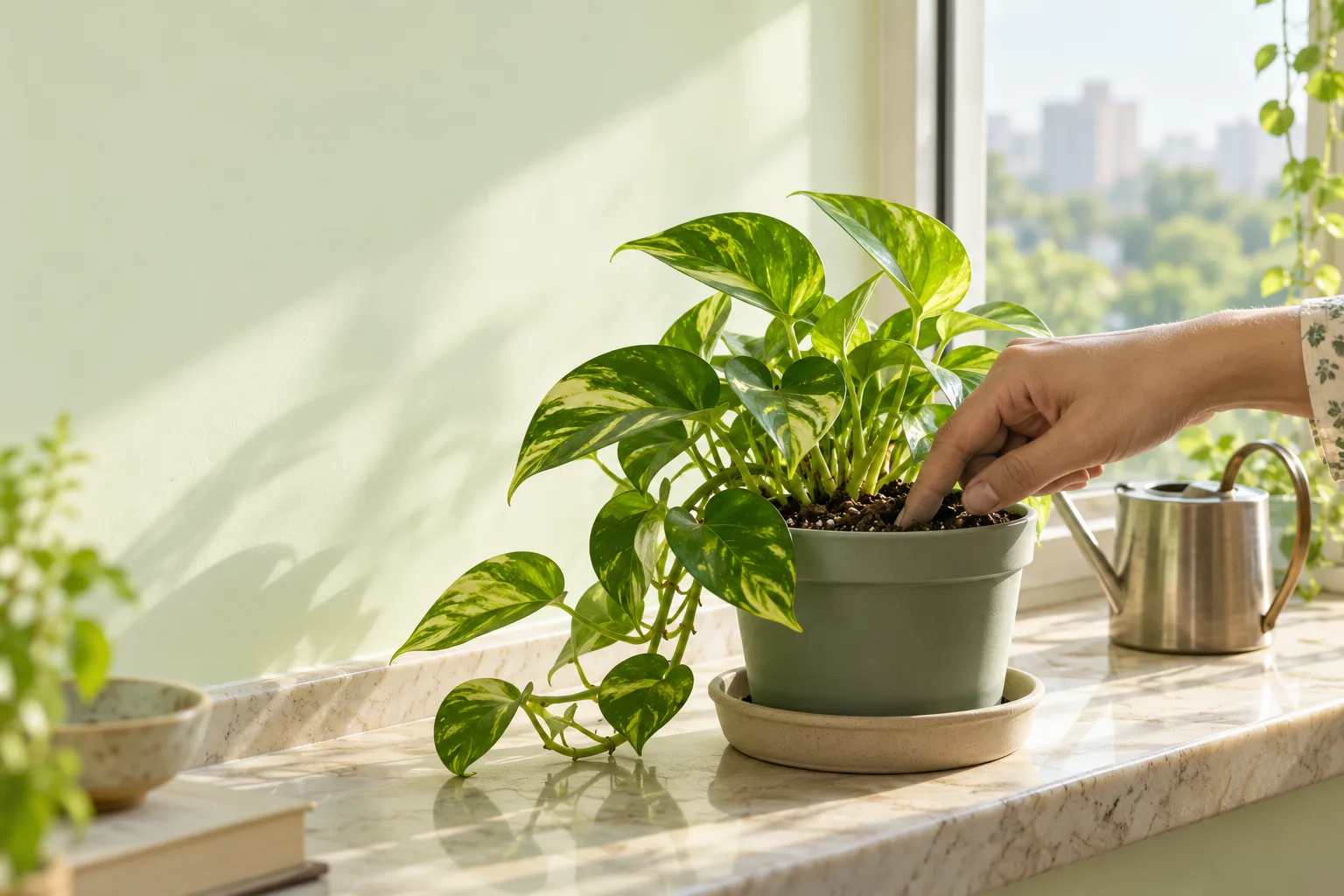
Imagine a Sunday morning. You’ve opened the curtains, found the watering can, and remembered the plant on the shelf.
You watered it last Sunday. That part you know. Whether it needs water this Sunday is less clear.
When you’re new to plants, a number would be reassuring. Every seven days. Half a cup. Something you could put in your calendar and stop worrying about.
But how often to water indoor plants depends on the plant and the conditions around it. A reminder can bring you back to the pot. The next decision starts with what you find there.
Why the same day each week can give you the wrong answer
A room changes. The window stays closed during a hot afternoon. A pot moves away from the light. The air feels damp for several days.
Your calendar still says Sunday.
The Royal Horticultural Society’s houseplant guide recommends checking whether a pot needs water rather than watering routinely. Its advice also notes that drier pots feel lighter than wet ones.
That gives a weekly reminder a useful job: it’s a moment to look, rather than an instruction to pour.
Start by learning what kind of plant you have
Before choosing a routine, find a likely identity for your plant. Check the nursery label, ask the person who gave it to you, or compare it with a reliable plant guide.
If you use photo identification, treat the result as a starting point to check. A name is useful because it helps you find advice for that particular plant.
Species matters. The University of Maryland Extension’s indoor-watering guidance describes checking the potting mix below the surface, while noting exceptions such as cacti and succulents that need less water. A single dryness rule won’t suit every plant.
You don’t have to memorise a whole care guide today. Start with its moisture needs and the conditions it prefers.
Make one observation before you act
Look at the potting mix and feel below the surface where accessible, using guidance appropriate to your plant. A glance at the top alone may leave you with questions.
If the pot is small enough to lift safely, notice its weight too. Over time, comparing the same pot after watering and as it dries gives you another point of reference.
Check whether excess water can leave the inner growing pot. A decorative outer cover may hide a pool of water underneath it.
Avoid turning one leaf into a diagnosis. Maryland Extension notes that wilting can occur with both too little and too much water. Look at moisture and drainage alongside the leaves before deciding what to do.
The aim is to collect a few useful clues. You’re learning this particular pot, in this particular place.
Choose what the observation calls for
When it’s ready for water
Follow the watering advice for your plant. For many conventional potted houseplants, Maryland Extension recommends watering so excess drains freely, then emptying the drainage saucer. Don’t leave the pot sitting in that water.
Make a short note afterwards. “Watered today” is enough to distinguish something you did from something you meant to do.
When the mix is still moist
You can wait when that fits the plant’s care needs.
This can feel oddly unsatisfying at first. You remembered the plant, fetched the can, and now you’re putting it away. But you learned something useful: today’s check didn’t call for more water.
Choose when you’ll look again, using the plant’s guidance and what you observed. That next date is a check, too.
When you’re unsure
Write down what you can see without forcing a conclusion: “Mix feels damp below the surface; one leaf has yellowed.”
Check the plant’s identity and care guidance again. If it continues to decline, seek help from a qualified horticultural source with photos and details of its conditions.
You can be attentive while still having questions.
Keep a note your future self can use
Here’s an illustrative entry:
What I noticed: The mix still feels moist below the surface. No water is sitting in the outer pot. What I did: Waited. What comes next: Check again on my chosen date, following this plant’s care guidance.
There’s no impressive gardening vocabulary in it. There doesn’t need to be. Next time you’re standing at the shelf, you’ll have something firmer than “I think I watered recently.”
In Plont, watering checks let you record watered, still moist or unsure, then choose the next check date. You still observe the plant and make the decision. The record helps you remember it.
If you’re beginning with an unfamiliar plant, Plont offers Scan and Browse as two ways to start. You’ll need a free account to use them. You can explore how Plont works before deciding to join.
A routine can begin with noticing
Next Sunday, the useful question may be easier to ask: what does this plant need today?
Some days you’ll water. Some days you’ll wait. As the notes accumulate, you’ll have more to draw on than the day of the week.
Explore Plont and start planting with one plant, one observation, and a next check you choose.